The horses weren’t just prized for their unmatched European bloodlines—they were cherished as family by the people who raised them. Then World War II changed everything. The Nazis confiscated the finest horses from every country they invaded, leaving those who lost their horses with nothing.
At the end of the war, with General Patton’s approval of Operation Cowboy, the United States rescued as many horses as possible from destruction as the Russians advanced. The mission was urgent—those involved would stop at nothing to save the horses from being lost forever. After the war, most allied countries had their beloved horses returned—except Hungary.
When two war-weary Hungarian countesses eventually made it to the United States, they worked tirelessly to save their horses’ bloodlines from near extinction. Teaming up with American cattle ranchers who had received Hungarian stock through the U.S. Army remount program, they began a breeding initiative, founding the Hungarian Horse Association of America (HHAA) in 1966.
Fast forward to today, these historic bloodlines are dwindling. Only a handful of people know their story, understand their value, and are fighting to keep this unique lineage alive. Without the efforts of Hungarian horse owners and dedicated breeders, these bloodlines could vanish forever. One solution is to breed Hungarian mares in the U.S. with stallions still in Hungary. But this task is far from simple—it’s technically demanding, financially costly, and biologically complex. For those involved, failure isn’t an option. But can the maiden Hungarian mares conceive?
In 2019, Hungarian horse breeder Valerie Sivertson invited filmmaker Kimberley Williams on a journey to Hungary to document the mission to restore the Kisber-Felver bloodlines in the U.S. Horse Diamonds is the story of that effort and its ongoing legacy.

b. 1901, Budapest, Hungary

b. 1910, Eperjes, Hungary

b. 1910, Budapest, Hungary


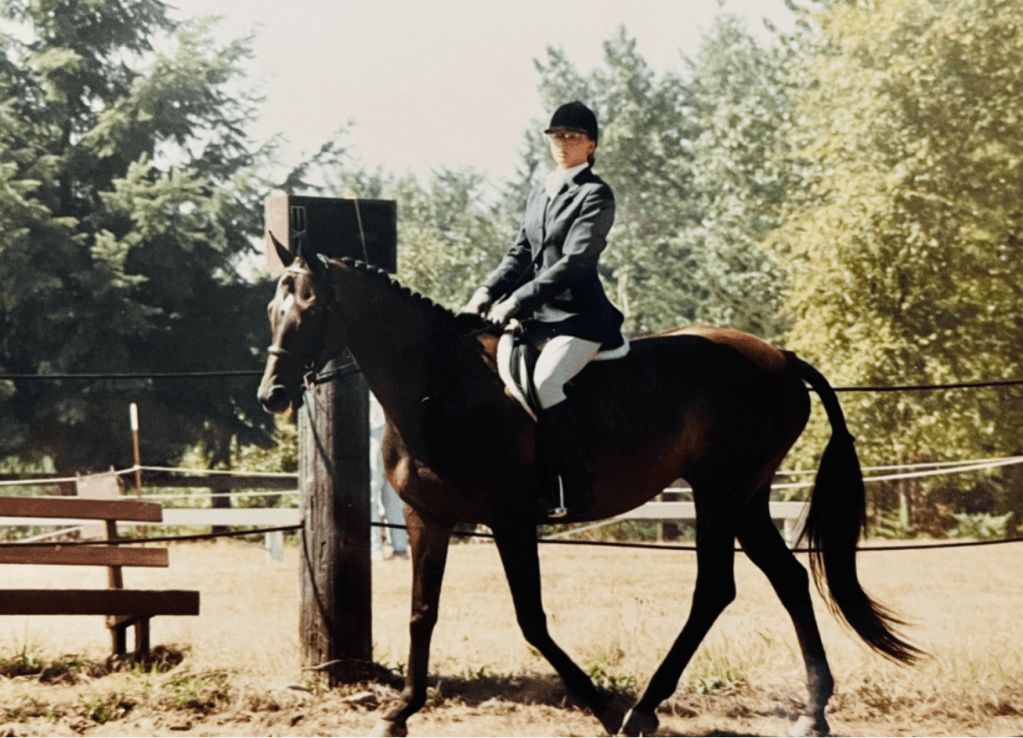
Hungarian Countess Judith Gyurky was a successful show-jumping competitor throughout Europe, even winning the Olympic trials riding sidesaddle but was disqualified due to being a woman. Unfortunately, both world wars were disruptive to her family’s estate and equestrian endeavors. After barely evading the Russian army during WWII, the Countess escaped Hungary with her horses to Austria by foot. Once she departed Europe for good, Countess Gyurky ultimately settled on Virginia feeling the similarities to her homeland, and the potential it could offer her beloved horses. Of the 64 horses she rescued from Hungary, only 13 made it to the United States. Judith would establish Port-a-Ferry Farm as a riding mecca and breed her Hungarian horses. She authored the book Mark of Clover and was one of the four original founders of the Hungarian Horse Association of America (HHAA).
Margit Bessenyey grew up in Hungary on her father’s aristocratic estate. During WWII, Margit and her mother were forced under house arrest for several years. In 1946, she left Hungary permanently and eventually inherited the Bitterroot Stock Farm through her grandfather, “copper king” magnet of Montana, Marcus Daly. Sadly, all of Bessenyey’s family horses in Hungary were lost during the war but once she reestablished in America, her foundation lines were started through 9 Hungarian horses acquired from the U.S. Army Remount. However, due to an illness, she was unable to attend the dispersal sale herself and so she trusted her compatriot, Hungarian equine specialist, Béla Mariassy to choose the highly prized horses for her. Countess Margit Bessenyey was one of four who established the Hungarian Horse Association of America (HHAA).
In 1947, Béla Máriássy was sent to America by the Hungarian government as a delegate to retrieve the royal Hungarian horses retained by the U.S. as spoils of war. However, due to political changes in Hungary during that time, Béla was advised not to return to his homeland as he was liable to be arrested. Forced to defect, Mr. Máriássy survived somehow for two years in his newly adopted country, before his wife Kata, and their two children escaped from Hungary through Austria, under the cloak of darkness, to join Béla in America. Béla eventually settled in Phoenix, Arizona where he established McDowell Animal Hospital, a well known veterinary practice which, at one point, was the largest small animal hospital between Los Angeles and St. Louis. There is little documentation about Béla helping select the horses for the countess. But with his son (Béla Jr.) sleuthing how his father survived those first few years as a Hungarian refugee, interesting and relevant details are being uncovered.
Steve and Wanda Cooksley operated a cattle ranch where they also bred and raised Hungarian horses. Originally, the couple were standing Remount thoroughbred (TB) stallions before it disbanded and they started using Quarter horse studs after the TB stallions were no longer available. Liking how the Hungarians fit their operational outfit, they bought a number of mares that were offered during the Remount dispersion sales. Three of these were bred to two Hungarian stallions that had been brought to this country by the Remount after WWII. All three mares had fillies and that was the beginning of the Cooksley’s herd. Steve Cooksley had close ties to the Remount, as his brother was an Army colonel, so he was able to help him find additional Hungarians at the Remount dispersal sales. The Cooksleys were co-founders of the HHAA. Their son, George Cooksley, eventually took over the cattle ranch operation and currently sits on the Hungarian Horse Association Breeder’s Board and Board of Directors. His equine experience and knowledge of the history of the Hungarian horse in America is invaluable.
In 1969, Valerie Sivertson was first introduced to Hungarian Horses as a student at Pacific Coast Equestrian Research Farm (PCERF) & School of Horsemanship. After graduation, Valerie remained at PCERF as an instructor and assistant trainer where she was fortunate to ride, school, exercise and show many outstanding Hungarian Horses. In 1970, Valerie completed the Tevis Cup with Linda Tellington and Margit Bessenyey as well as competed in many Hunter, Jumper & Dressage competitions. Val purchased her first Hungarian horse in 1978 and started breeding them in 1989. With the help of her husband, Mark Sivertson, they established the Ohop Valley Hungarian Horse Farm, proudly producing quality Hungarian horses including the stallions HS Kivalo and H Randevu. Devoted to the Hungarian Horse and its rich history here in America, Val serves on the HHAA Board, and believes it’s imperative to strengthen the Felver lines in order to preserve the history and the continuance of this important breed.
Filmmaker, Kimberley Williams grew up on a wheat and barley farm in Eastern Washington state where she started on horseback at a very young age. Learning horsemanship throughout her childhood, in 1987, at the age of 14, Kimberley arrived at Valerie Sivertson’s horse farm ready and willing to do anything to ride and learn. Kimberley lived at Val and Mark’s horse farm during the summers and in addition to riding the horses in training, Kimberley also rode their Hungarian horses. Then at 17, Kimberley left the rural life to pursue her higher education, eventually earning her MFA in Film and Media Arts. Now, 30+ years later, Kimberley teams up again with Val to tell the story of the Hungarian horses. Through her Austrian mother’s family history, Kimberley’s European roots connect her deeply to the horse’s remarkable story. As they attempt to bring this complex story to light, Val and Kimberley work together to breed Val’s Hungarian mares that come from the Gyurky, Bessenyey and Cooksley lines, with the attempt to keep the bloodlines alive.
 HORSE DIAMONDS